This year, I gave up Lent for Lent. Gave up the hope that I could move the hand of God by skipping chocolate. Gave up my worship song theology that breakthroughs, turnarounds and miracles in the works might more likely happen if I sacrifice for Him like He did for me. Unless I subject myself to brutal torture on His behalf, I’m pretty sure that any sacrifice I make is laughably no comparison. I know that isn’t the heart of Lent, but, if I am honest, it sounds a lot like mine. My secret belief that if I just religion religiously enough then He will do the thing that I need in the way that I want, so that I can give Him all the glory, of course. And of course He wants all the glory, I’m just trying to help. Frederick Buechner writes that most theology is at its heart autobiography. The problem isn’t that God isn’t capable of my miracles, I know He is. And I don’t think the problem is the size of my faith since the size of a tiny mustard seed is all that is needed to move mountains into the sea. Skepticism isn’t always a lack of faith, sometimes it is a humble awareness that I may not be looking for or expecting the right thing to happen. (*eg. Every one of those 12 men closest to Jesus hanging on His every word for three years had the same problem). I can fully expect that He is going to do “it,” whatever my “it” is, but, like the apostles, maybe my hope is a bit too extravagant, too miracle-y, too victorious in how I define victory. Buechner speaks of those miracles and victories as being found in “the clack-clack” of our lives. “The occasional, obscure, glimmering through of grace. The muffled presence of the holy. The images, always broken, partial, ambiguous, of Christ.” Isn’t that the real miracle afterall? That the God of the universe would come to little us, putting Himself at our mercy, walking among us, breaking bread with us while He Himself is our Bread. “Give us this day our daily bread …” Yes, give us what we need as physical sustenance, but give us this day our daily Bread. The clack-clack of daily life with God. That He is my sustenance alone apart from any answer I am looking for from Him. That He might become my literal daily Bread. My desire for the thing I want from Him isn’t at all bad. In fact, it may very well seem like exactly what He would want too. But when my will is taken captive by desire for the lesser thing it is more like a rice cake for my soul than sustenance. My actions in pursuit of desire become religion. And I starve. I can tell myself that God is my desire, but the value I place on Lent that says if I do x, y and z then God will … is really attached to what I hope God will do for me, how I want Him to move. Desire, if not compelled by a singular love for God, apart from any good thing that comes from His hand, will never be satisfied. If my intimacy with and connection to God are hinged to how He shows up for me in the fulfillment of my desires then I will miss Him more often than not. If in the act of Lent what I give up is myself, my autobiographical theology, then maybe I get in return a more authentic communion with Him. A uniting with Him in His Passion that drove Him to the cross, the compassion of suffering with Him to learn “obedience unto death, even death on a cross.” A communion with Him, and saints before me, who gave up “self” in service to God and others, who died to the self-life to gain true life. Until I get this, really know something more of His suffering and sacrifice than my good health and First World sensibilities will allow, then I am giving up Lent for Lent. And I will look for Him – instead of through my religion that desires to move His hand in my direction – and observe more intently to spot Him in the clack-clack of the daily, the holy moments that have nothing to do with my performance and everything to do with His lavish and baffling sort of grace, in spite of my efforts and because, simply, He loves me. As if I need more evidence than the cross itself, in this love He gives it to me anyway.
There is a restlessness that keeps yanking on my sleeve trying to get my attention. I have ignored it, pretending it isn’t actually as annoying as it is. I am way past mid-life for it be the sort of crisis that would cause me to buy a convertible sports car and leave all that I love for something new. It’s not that. I am far too content with my life and the people who matter most to me. It is something in my spirit, I think. Rather than asking me to leave, it is asking me to show up better: to show up to myself in ways I abandoned longer ago than I even remember. Since I failed to show up bravely last year as my “word for the year” said I would, now it is just resigned to asking me to take some steps toward beginning.
To begin is to invite fear to a party we aren’t even sure we want to go to. Before we can find our way to that comfy chair in the corner right next to the snack table, criticism, judgment and failure have all asked us to dance. To begin is to know that what we start may not be sustainable, but we begin anyway. The world, especially the digital one through its veil of anonymity, is not always a safe place to expose or explore: especially when life is not always what you thought it might be and feelings are tender about that. However, a little bravery, risk and trust come and ask for my hand, lift me to my feet and invite this sleepy soul that craves peace more than anything to follow their lead.
You know how you know that something needs to change but you don’t fully know what? What I do know is it will only begin if I begin. Begin a clearer way of seeing; wiping clean the lens of only my own experiences I have been dimly seeing through. Begin a posture more inclined to listen, to lean in and not seek for my turn to speak. Begin to move my feet in step with the rhythm of a new dance and less prone to step in wet cement. Begin a new season on paths less traveled, at least by me. Begin, when not to is to hit snooze and fall asleep to myself. Again, for the 4,872nd time. To begin is to put my snacks down, get up from that cozy chair and dance; to move my feet past my self-imposed limitations and my self-conscious missteps. To be attentive to new rhythms and follow their lead even if I’m not very coordinated and someone might snicker or point.
Begin because God Himself is in all our beginnings. “In the beginning, God created … ” and made something new. In Christ, He continues this work and makes “all things new” again and again. As He is in all our beginnings, He is also in our necessary endings: jobs, relationships, habits, family, a way of thinking, fear, shame, disappointment, loss; He is with us in all of it. He is for us in all of it. To begin something new in us, He may need to bring to an end any diversion or obstacle to the thing He wants to begin in us. Necessary losses that allow something new to cut in and have the next dance.
In our beginning, God … Yes, God, be with us because only if we follow your lead will we take steps in the right direction. And even then we can’t be trusted to not dance to the music in our own heads. And for those of us that may need to close a door bringing an end to something old, create for us a door to those new beginnings, even if the door itself is heavy with painful endings and fear is waiting on the other side hoping for the next dance.
I began this challenge to share more of my writing publicly well over nine months into a year I had told myself that my word for this year was “Brave.” Aside from a few isolated moments of shuffle steps toward courage, usually coerced rather than volunteered, I have failed pretty miserably. Fear is the Goliath that I scramble to find stones to defeat, but often only find dirt clods that crumble in my hands. Fear intimidates the tenacity needed in any act of bravery. But fear of what? Well, when it comes to throwing something I write out into the world for anyone to see, my mind conjures up images of throwing myself over a cliff onto the jagged rocks of judgment, rejection, criticism and character or reputation annihilation. Or maybe the slightly less dramatic outcome of someone’s indifference. As if that weren’t enough, there is also this fear of seeming self-indulgent. That may actually be the biggest fear of them all. To be self-indulgent seems, well, selfish; arrogant, absorbed with all things Me. As if I have something to say worth listening to.
Writing has always been simply a devotional practice driven by a love and high regard for words, particularly the written ones. Words are just the topsoil, really, of thought or emotion that unearths much deeper things than the word itself. I think maybe that is why writing can help us make sense of our lives; carving a path through our pain and hopefully into a clearing out on the other side of it. Writing makes a way for us to place outside of ourselves all that is swirling around inside of ourselves. I remember seeing a cartoon of therapy once that had all kinds of craziness and chaos twisted and knotted up inside the client’s thought bubble. Inside the therapists thought bubble was an organized and untangled translation of what was really going on in the client’s mind. I think writing can be like that too, creating order through words out of our chaos of thought.
As a professional counselor for over 30 years, I have had the privilege of bearing witness to how words can unlock inner rooms full of deep things, hidden things; pain, suffering, fear, grief, trauma. Often the right word, or combination of them, is the key to that space inside that needs the door gently cracked open, that lean in a little and say, “Hey, are you ok? Can I come sit with you? Do you want to talk?” Those spaces can be accessed by the words of safe people in our lives or through the wise, kind, compassionate words we can learn to speak to ourselves. The latter, in fact, becomes the master key to every room in our inner house.
The longing to write has always felt like God to me. Not a god, though maybe it is a kind of idolatry: A false god that becomes the focus of my attention in order to gain attention, rather than the focus on the One who has given me something, anything, to write about and just enough skill in assembling a few words together to pull it off.
Nothing brave happens if nothing brave happens, so here goes. If you are reading this that must mean that I continued to take tiny, baby, shuffle steps toward a bit of bravery. I can neither confirm nor deny whether there is a hand pressing firmly against my back. Maybe the kind of bravery we see in the movies is really just found in movies. Maybe most of us just stumble, shuffle, crawl ourselves into our acts of bravery. Regardless of the outcome; even if you never parachute out of a plane, run into a burning building to rescue a puppy, move to a third world country to love on orphaned babies, or risk your life for love of country – or even, like me, imagine throwing yourself over a cliff onto jagged rocks below, you did get out of bed this morning. Well, maybe you didn’t, but you did scroll through some posts and begin to read. So that’s a start. Let’s begin there.
As a result of last year’s failure to be more brave, I decided that this year’s word would simply be, Begin. Just begin. The following are a somewhat loosely assembled, disconnected but not unrelated reflections on some of the stuff of life and humanity. Some I have learned by the life I have myself lived, but much of this is unapologetically stolen wisdom from the hundreds, maybe thousands, of precious humans who have sat on my literal therapy couch over these past 33 years and entrusted me with the stories and lessons of their own lives. Some people find treasures of loose change in their cushions, I get to find treasures sitting right on top of mine.
In the end, the only end I aim for is to keep the promise I made to myself to be more brave. And to just begin. A kept promise that I hope answers the invitation shoved under the door of my spirit more years ago than I care to admit; and is a brave step that responds to the nudges of many a kind other whose affirmations and gentle hands on my back have breathed in me courage enough to find words enough to say enough to fear.
If there is something in these words that makes you feel more seen or heard, or to not be so alone in the reflections of your own interior life; if you are inspired to step more bravely into your own one beautiful life, then fear has taken a smooth stone to the forehead. That is my hope, but even if not, I have held true to my own promise and ever so fearfully crept into my own bravery, and took a lifelong giant down.
Nothing that I say here couldn’t be better said, or has been, by someone else. But that’s the ground-leveling beauty of all of art, writing, or creativity of any kind. Take the pressure off; none of us are truly original. By someone else, somewhere else, a seed was planted. This is just what it looks like when it’s watered in my garden. It will take a different form and beauty of its own when it flourishes from the personality, experiences, temperament, DNA and perspective of another. All art plants something in each of us that didn’t come solely from ourselves. I think it’s important to remember that nothing I have done or accomplished comes from me alone.
Every song uses the same notes used in variation to create a symphony, and every writing uses the same alphabet in variation to tell a story. I have exactly zero musical talent, but by only the grace of God, may He orchestrate these words into something He would enjoy listening to.
More to come, one smooth stone at a time. It may take the rest of my life, but this is my brave beginning.
“May these words of my mouth and these meditations of my heart be pleasing to you, Lord, my Rock and my Redeemer.” Psalm 19:14
I have heard it said that authors write the books they need to read. I’m not an author, but I have often written what I need to read. And this writing may be one I have needed more than most.
Sometimes unlearning is the highest form of learning. I am unlearning Motherhood.
We use the word “deconstruction” to describe how some dismantle the structures of their faith in hopes of rebuilding something new and better. I think that is a useful analogy, but I prefer to think of it as more like carefully wiping the years of accumulated grime and varnish off of a magnificent work of art; revealing it once again in all of its original beauty, purpose and significance. Not building something new from rubble, but restoring something of great worth to how it was always supposed to be. I think I am deconstructing Motherhood more like that. At least I hope that is what I am doing.
One of my son’s recently created a compelling short film series called “Help Me” as a way of processing his pain. [Attached below]. In it he cuts back and forth between images of his real life mental health struggles with depression, substance abuse and suicide to images of his younger years in home movies. He overlaid the film with a conversation that he and I had by phone about a year after the peak of his mental health crisis, which had taken a considerable toll on our family and his relationship to each of us. Significant damage was exacted on the mother-son relationship, in part because of my response to his crisis. Our conversation that day was the first time we had begun to talk through some of what happened during that time. I’m pretty sure neither of us were convinced that our conversation that day would not just inflict more hurt.
Upon seeing the film, I wasn’t yet able to name thoughts or feelings about it, I just knew I had a lot of both.
The following are just some of my reflections since then; some of what I am uncovering. No doubt there is more to come as the layers wash off. This is just part of what may be a long process; not meant to speak for everyone in this circumstance, just me. Nor is it intended to cast blame, generalize or offer a singular cause to multiple and complex issues.
There were years that I felt like a complete failure. Still in the woods on that one, but I am starting to understand what I need to relearn and learning to let go of what couldn’t be controlled. And forgive what none of us at the time knew what we know now.
There were some formulaic parenting methods that didn’t end up being as unfailing as I had once believed. Church, youth group, Christian school, Christian friends, Summer and Winter Camp, sports, service projects, Jesus-loving parents, a safe rural neighborhood, loving Grandparents nearby, parental controls on all electronic devices, Bible readings and “saying grace” at the table, prayers at bedtime and conversations meant as teachable moments, all provided no guarantees once our sons left childhood.
Not all things taught are caught. Not all things said are heard. Especially if the heart of the issue and the heart of the learner get lost in the process.
I am unlearning that love is defined by how I experience it.
I am relearning what it actually may have looked like to love sons better. What they needed, from an even younger age than I realized, was my respect. I now believe the deposit of respect [as esteem, regard, acceptance, trust, honor, admiration] is more likely what yields in them the feeling of being loved.
I think most of our men would admit – even the youngest among them – that they need our words and actions to display respect; that we honor them and approve of them. Even when, especially when, we disagree. If my love is not wrapped in respect, it may not be received as love at all.
Authentic respect is an act of humility where there is no competition, condescension or scorekeeping. My esteem of them and honor toward them may be what persuades them to higher, wiser, actions; ultimately more loving ones than my desire to control or correct ever will. My respect may be my highest act of love.
To convey my truth in love requires honoring and respecting the way they can best receive it as love. Love speaks the language of Other, not Self. Otherwise, it likely goes unheard.
I have often been more concerned with dispensing wisdom and information than drawing it out. Commenting instead of connecting; a more transactional approach that expects a performative response.
Parenting, by nature, is understandably corrective. We don’t have to teach our kids how to be self-centered, it just comes naturally. Somewhere along the way, I lost the eyes to see that parenting is less about behavior management than soul management and that disapproval and correction, without purposefully speaking into the heart and spirit, may be internalized as disrespect and condemnation. I failed to offer enough of the kinds of affirmation that builds trust and self-love within them; that enables more loving acts toward themselves and others. And I fell short in helping them acquire language to understand and communicate the struggles and longings within their souls.
My love as a Mother often conveys something like, “Come as far as you can, and I will travel the rest of the way to meet you.” Or, maybe more often, “Wait, never mind, I will just come all the way to you because you obviously need me.” Respect for my sons may have sounded more like, “How ‘bout we meet in the middle. I trust you on your leg of the journey. Let me know if you need anything.”
I know that scripture tells the truth when it says that “love drives out fear.” But the inverse is also true: fear drives out love. Parenting from fear instills and implies disbelief and lack of trust in my sons’ enough-ness to meet whatever they may face. Or in God’s enoughness to meet them where I can’t. Or shouldn’t.
And Fear is the most manipulative and deceptive of all emotions, causing us to see what isn’t there and not see what is. Even the most sincere faith, when infused with fear, tastes a lot like religion.
So we will never not make mistakes when parenting from fear.
In defense of every Mother, it is important to acknowledge that for most of those early years they really DID need us for most everything. No offense to the many very involved and impactful Dads, but it is most often Mothers who specialize in understanding what the sound of every cry or whimper means. It is Mothers who often carry the lionshare of feeding, rocking, holding, diaper-changing, bandaging, tear-wiping, bathing, clothing, chasing, shopping, hair-dressing, shoe-tying, in-store-tantrum-managing, emotional melt-down unpuddling, and car seat craziness correcting. It is most often Moms who are explaining the whys, how comes and what ifs of every aspect of their child’s world, and it is Moms who hear the name “Mom” yelled, whined, whispered, screamed more than umpteen times every.single.day. For years. And then, when it’s Dad’s turn to hear his name, his response is often “go ask your Mother.” It never ends.
There is no internal breaker switch in Moms that, at precisely the right time for each of our kids, just shuts down the power to that part of us. So it’s understandable that somewhere along the way, and I’m not sure what road signs I may have missed, I failed to make the transition from unconditional love and caring for their every need to unconditional respect and entrusting them to begin to care for their own. And I think it happens much younger than most of us Moms realize. If we are truly loving well and unconditionally, we cannot overlook the essential nature of men and the need for unconditional respect and honor, even in our boys who are not yet men. Otherwise our love will be lost in translation.
Having three sons who missed the benefits of having sisters, I took it upon myself to teach (ie. lecture/instruct) my sons how to be loving to a woman, understand her needs, and cherish her heart. Unconsciously, it seemed a trouble-free way for me to settle some of the hurts of my own heart in the process. However, it failed to respect the need of their hearts to be enough for the women in their lives without a Mother’s unsolicited help. And it failed to help them learn to love themselves, tend their own hearts, and identify and understand their own needs: of requisite importance for any healthy relationship. Or any healthy human, for that matter.
I failed to adequately help them make the connection between the condition of their heart, mind and spirit and the impact of those on their actions and relationships. I guess we just tried to convince or consequence them into wisdom and self-awareness.
I wish I had more consistently honored the image of God in them: with grace, patience and forgiveness, remembered that even a willing spirit loses battles to weak flesh and that our actions aren’t always the best reflection of that spirit. And to have better prepared them for inevitable battle losses, not just believe they can be avoided. This is true for each and every weak one of us, we just lose on different battlefronts.
If, in our effort to Mother them into good behavior, we behave in such a way that is perceived as contempt, control, or condescension, we will never motivate a son to right action or move his heart in the direction of love. (Or a husband for that matter. Just a side note). They may comply in the short-run, but over the long-haul of life we will have lost their hearts.
Whether an act of disrespect toward me leads to my disrespect toward him, or the other way around, it is early on a Mother’s responsibility to lead in the way of teaching respect by first modeling it. I must first demonstrate what I demand in return. Even correction and healthy boundaries can be put in place respectfully. I am beginning to understand that the men in my life value respect over love, or maybe more accurately, perceive my respect for them and honoring of them aslove. When my love demonstrates respectfulness, I am speaking their language.
Beginning in my sons’ youngest years, and even now, my regard for who they are in the truest parts of themselves should never be sacrificed when correcting behavior or expressing concern for how they may appear to be struggling or changing from who we have known them to be. There is a deeper heart to be accessed that is much more than the sum of their choices. Or attitudes. Or affections. Or addictions. Every small, seemingly insignificant, act of respect and esteem will lead to the larger gain of our hearts’ connection, which I will take any day over compelled compliance.
There should be no place for contempt or disdain in our homes. From either parent. It will never produce the outcome we desire from the ones who are closest to us. Even if not verbally communicated or only dispensed in the smallest of doses; it is sensed, felt, received as such. Silence can be as contemptuous as words. A harsh look can inflict less pain than not being looked at at all.
Trust is built in the smallest of increments. It can be broken in the same way.
Commonly, women have radar honed to search for cues that we are known, pursued and loved. And men are hard-wired to perceive even the most faint signals of disrespect and disregard. My best intentions to love go undetected when overlaid with a filter of disrespect, disapproval or mistrust. Love is strained out altogether. Signal lost.
Generally, if a woman’s proof-of-worth comes from gestures of love through (ie.) tenderness, thoughfulness, affection, connection; a man’s proof is in demonstrations of respect: (ie.) to be esteemed, admired, trusted, honored. Enough.
A man’s sense of worth will be inherently at a disadvantage if we view respect as conditional, something only given if earned; yet we think of love as something to be given unconditionally and unearned. Anything unearned yet given goes by the name of Grace.
Speaking the language of both love and respect means that I will have a charitable understanding that our actions and words may not always be an accurate demonstration of what lies in the deepest, truest parts of ourselves. We all have protective parts of our inner selves that may come to our defense and obstruct our view of what is really going on. Our men, for the most part, may have a greater fear of being vulnerable, of appearing needy or weak. If their needs seem burdensome to them, then the fear of rejection, failure, or not being enough may prevent the vulnerability that the women in their lives may long to see. There is always more going on under the surface. And my respect for and trust in him may mean that, when he is ready, he will show me more of what is beneath the water line.
There is immense power and beauty, as well as the potential for toxicity, on both ends of the gender spectrum. There is God-designed artistry and flourishing that comes from our differences; equal in worth and value, complementary in perspective and function. I wanted my sons to know that women are powerful and fierce and necessary: that femininity is not inferior to masculinity but its equal partner. Respecting the men in our lives does nothing to diminish a woman’s power. I would argue that it enhances it. Love that identifies and speaks the Mother Tongue of the ones I love may be the most wise, powerful, tender, fierce, expression of love there is. God himself humbly put skin on and literally spoke human language to demonstrate to what extravagant lengths His love would travel. We just need to travel across the room or down the hall.
Not even Instagram and Facebook can convince me that there are perfect relationships or families, though it may seem painfully so on the comparative surface of things. The distance between us is often far shorter than it seems.
In the days that followed the posting of my son’s film, we were both astounded by the response. It seems to have hit a nerve and put some language to the pain of both parents and their adult, young adult, or soon to adult kids. We neither one had any idea of the groundswell of pain and gratitude that would surface from this. If it gives permission, encourages, exhorts parents to lovingly and respectfully engage their kids, or for adulting kids to do the same, then I think we both agree that our pain in this process was worth it. Our vulnerability to expose a still tender wound, if it leads others to do the same in an effort toward healing and restorative acts of trying to love each other a bit better, then our pain wasn’t wasted.
It takes humility and courage to step into relational conflict and hurt in a way that maintains honor and respect for the inner parts of the ones we love, while maintaining our own flawed dignity, integrity and strength. I have wasted more time trying to prevent “failures” in my sons’ lives than to recognize my own. But it is often our failures that take us by the hand and walk us toward learning. Our flaws are covered in forgiveness when grace enters the room.
Crises are disorienting and can sweep through our lives like a wild fire taking us by surprise and burning up memories faster than we can save them. We can’t stop it or control it; we just clean up, sift through the ash and wreckage in search of treasures and fragments of remembrances to piece back together as best we can. Then we change, rebuild, restore, discover joy.
I still have much to unlearn and will continue to make mistakes even while striving to relearn. What could a girl have really known about raising boys? And what can she fully know about how to love them well even now as men? By the grace and mercy of a loving God, I take some comfort in knowing that it is part of what it means to be human – that we are all still trying to figure it out and get it wrong sometimes. Maybe we could learn to be more patient and forgiving of each other if we remember that.
Again, these are just current reflections not meant to lay blame nor over-simplify or generalize about the complexities of family life. Reflections, by nature, shed light. And these are simply those of one Mother on one leg of her journey toward a better understanding of, and a better effort toward, loving well the men she loves most.
If you would like to view the film I referenced, here is the link: (*trigger and language warning in some parts). A Mother’s dream and nightmare all in one 20 minute film.
I caught one of those National Geographic shows you watch when you wish you could leave where you are and get away to somewhere you would rather be. Anywhere, really. It was just playing in the background, but it caught my attention. It was a travel show on the Amazon, its people groups and the rich necessity of all the trees and waterways that part of the world has to offer the rest of the world. Strangely, it actually got me thinking more about humans than it did about trees.
Apparently, despite all the wonders the Amazon possesses, it does not have soil rich enough at its depths to support their tallest of trees. Unlike the Redwood whose roots go deeper down into the earth and intertwine with roots of other trees to strengthen the stability for all, the tallest trees in the Amazon have to spread their roots wide on the surface; so wide that they will literally displace or destroy whatever is closest to them in order to create some stability for themselves. They essentially must steal the nutrients from other vegetation around them in order to survive; in order to seek sunlight for themselves. Any two height-seeking trees next to one another engage in an all-out ground war for surface nutrients and turf.
I kind of wondered if that is a bit like humans these days. The deeper we dig and entwine our roots, the richer the nourishment becomes and the “taller” we grow but in a way that is not destructive to those around us; all are made stronger and taller. This living on the surface of things, however – the warring for turf; the not digging deeply, under the surface of issues, with a willingness to question our own positions; not evaluating an argument on its own merits instead of which “side” is making the argument; and not simply listening respectfully to another. The not digging deeply into the empathy and compassion needed to understand another’s story, and hear why they are so afraid to understand mine, is stealing the nourishment needed to grow and is making us ultimately more unstable.
When we dig deeper, we find our fears place us on more common ground than we realize; intertwine us in ways that strengthen us all. Hate and anger are really just masks for fear and vulnerability anyway. We share talking points instead of truth, reactions rather than thoughtful responses, comments in place of conversation, judgment over compassion. We seem to care very little about how words and ideologies spread out on the surface of issues creating a wide swath of destruction in an effort to gain some semblance of stabiity for ourselves. We sow in the shallow soil of opinion and punditry, narrative and negation, politics and personal attack. We cancel those who don’t agree with us, missing an appointment with personal growth. Speech is only free when there is enough of it to go around. Nourishment is always found below the surface and outside of myself. And there’s really more than enough for everybody and no one has to lose a limb over it.
Interesting side note about those Amazon trees … The natives believe that evil spirits inhabit the buttress roots. They take up much space in their destruction of all other vegetation on the surface and are thought to be “tricksters” that like to “frighten people away, or draw them in, with a hollow knocking sound.” A hollow knocking sound. I’ll just leave that metaphor there and open for your own interpretation.
As for digging deeper and entwining our roots, maybe in that metaphor we all get what we need, support each others’ growth, share the sunlight. And no one needs to get taken out just trying to do the best they can to grow and make a life for itself right alongside us.
I am a middle-class White woman. I haven’t always been middle class, but I have always been White. My father left when I was young, and I was raised in Southern California by a hard-working single mother who struggled to make ends meet. I was blessed with friends of many cultures, stories and colors. But I didn’t know …
I wonder, now, how I didn’t see it. How many times have I missed seeing people, really seeing them, through a lens I hadn’t known I needed?
The following is a collection of thoughts about a subject I have begun to learn; through conferences, conversations, reading and, honestly, simply paying attention and listening. There are times when my heart has felt broken wide open, yet my eyes are still squinting to see more clearly and my ears bending to hear beyond what is familiar.
I share this with much apprehension at the responsibility of it. And of how much I still get wrong.
As I listen for understanding to voices unlike my own, I keep saying to myself that “I didn’t know what I didn’t know.” I have had the luxury of not having to know things; of not even having to think about some things. If I have my eyesight, or my hearing or all my limbs, I don’t have to think about what challenges I would have without them; how I would navigate life without them. I have the advantage, the Privilege, of not having to think about such things. Maybe that is much of what Privilege means, really – not just that I might have had more advantages in life, though that may be true as well, but that I have had fewer disadvantages.
If you are White like me, please sit with me a minute in this and hear me all the way out. This is not a lecture but an invitation. Our defensiveness against the word Privilege, and what we assume it implies and accuses, will blind and deafen us to realities we will reject simply because they are not our reality; insulate us from the challenges facing others that we never have to think about navigating ourselves. As a White person, the only thing I have to worry about when I get pulled over is how much money my ticket is going to cost and how late I might be to wherever I was going. There are so many prayers for my kids I have never had to pray, instructions for their safety I have never had to give; things I have taken for granted, never had to think about, like how Band Aids match my skin, or how “Nude” is a color, but it’s the color of my skin. Or which stores, if any in my town, carry the products I need for my hair or make up. That I am more likely to be assumed innocent, educated, affluent, safe. Not angry. I don’t often have to wonder whether I will be welcomed at church, or most anywhere for that matter.
It’s easy to not care for what I have had the luxury (the privilege) of not seeing and dismissing what I don’t understand, or don’t even try to because it doesn’t affect me. How many opportunities I have missed for empathy and compassion; love for “the least of these.”
A blind spot, by definition, is to not see something that is there. Not that I am not looking, but that something is in the way of my seeing. What is in my way is actually invisible to me, hidden, which is why I don’t even know it’s blocking my view. But just because something is hidden from my view doesn’t mean it’s not there. If I am not willing to take another look, turn my head a little farther, crouch down a little lower or stretch a little higher, to walk in another’s shoes, then my blind spot renders me captive to my own lack of awareness, my ignorance.
I have been seeing people of color through the eyes of my own experience, not theirs. If I deny my whiteness as a potential blind spot, choosing to keep it hidden from myself, then I will naturally, unconsciously perhaps, be dismissive of the experiences of my brothers and sisters of color. And simply not see. I get to choose whether to see. They don’t. It is never hidden from them, their color nor mine. Unless I am willing to not simply rely on what I already know, or think I know, but become willing to see through the lens of history and experiences of another then I will never see. Nor grow. Nor love. If White and Western, because they are normative, are my default settings, then I will surely miss seeing, encountering, the expansive beauty of an even more magnificent God – Father, Son and Holy Spirit – through the eyes of race, culture and ethnicity, and the diversity of “tribes, tongues and nations” … far more spectacular than anything my eyes could ever behold through the singleness of my vantage point. (2 Corinthians 5:16-21 / Revelation 5:9, 10).
If the willingness to be inconvenienced is the ultimate proof of love … then our current systems, power structures, how we define value or ascribe importance, hiring/immigration/asylum practices, and the language we use to describe or evaluate a person, must be challenged by voices we invite to the table that are different from our own. Without that, our actions will never be aligned with the love of Christ and the unity He requires. Otherwise, “Christian” is just another overused or useless term that really doesn’t mean anything. If we want it to mean what it really means, we have to be willing to be inconvenienced on behalf of others, because of Christ. This is a responsibility that comes with my Privilege, and as a Christ-Follower I am to steward it well. (Luke 12:48/Ephesians 4:1-6).
We have to begin where we are. If I am going to live honestly and with integrity I have to know where and who I am. First, admitting there are things I may not know is the only path to learning anything. Also, I am White. I am also, for the most part, Conservative and Evangelical. These are my lenses. We all wear them. Without naming our own and being intentional to borrow the lens of another, I will inevitably judge others, and they will judge me, based on a truckload full of assumptions, suspicions and conclusions drawn from labels, language, misinformation and appearances. And many times, we will be very wrong. (Mark 7:1-4 / John 7:24).
My singular lens is something like looking through a keyhole believing that I can see the whole room. I cannot. I need to open the door and step in.
I am incapable of affirming the sufferings of people of color unless I humbly admit that I have not been affected by this life and the fallen-ness of humanity in the same ways that they have: That I have enjoyed concessions and benefits (privileges) granted me simply by my whiteness that they have not. Acknowledgment of this is where I can begin to listen. To love. “This is who I am … tell me who you are. What is it like to be you?” (1 John 4:20)
While at a conference on racial reconciliation a few years back, I felt as though my mind could hardly contain all that I was learning, but I was also having a difficult time containing my emotions. Partly, I felt a sad regret about all that I had not understood until now, and that I have so much more to learn, and act upon, and less time to do it in. But I also wondered how many opportunities I have missed to really see someone, to love them better … I was also humbled, mixed with a bit of shame, that in the face of my ignorance – and generations of people just like me who don’t know what we don’t know – I was met with a most undeserved and generous grace that was being extended by literally every person of color I encountered. This compelled me, compels me now (2 Corinthians 5:14), to want to “know more and then do better,” (thank you Maya Angelou).
I can no longer dismiss what I don’t understand or have been blind to. I need to be willing to risk and ask and then lean in and listen: Listen to a story full of experiences not like my own and whose truth I don’t get to question simply because it doesn’t match my own. And whose expressions of hurt, by whatever means they express them, are deeply rooted in a history of experiences that I cannot understand because I haven’t lived them. And therefore, am not entitled to judge them. If I fail to hear the heart behind the words and the hurt beneath the anger, then the only story I am really listening to is my own.
If I love and serve a “Suffering God”, Jesus, who was “despised and rejected, a man of sorrows, acquainted with grief” (Isaiah 53:3), why would I not concede that those who are well-acquainted with rejection, loss and suffering might actually have something to teach ME about Christlikeness?
I continually process my experiences, conversations and readings, and choose to let them disturb me, trouble me, so that I will not grow complacent. I am reading books and articles that I wish I had read long ago, and am seeing history, culture, and even the church, through a clearer lens I didn’t know I needed. With White as majority culture and normative, I will naturally have hidden biases that I must allow to be exposed and challenged. And that as a white person in this country, most, if not all, of the seats at the tables of dominion, doctrine and decision are reserved for me (or at least my white brothers), and not for my brothers and sisters of color.
It takes courage to say that we don’t know what we don’t know and to be vulnerable learners of the lessons of others. As one human race, all bearing the tangible image of the invisible God, we must respectfully, and in genuine humility, engage one another on this issue. It is far too important not to. And not just because for people of color it is good to be seen and heard, but that for those of us with the privilege of whiteness (yes, it is actually a thing) it is good to see and hear. If we are to succeed in anything, we must be willing to risk failure. If we let shame prevent us from identifying and acknowledging our failures; seeing, learning and growing from them, then that is the most insidious failure of all.
We can lob word-grenades at each other from our respective fox holes of religion, race, ideology or even experience; or we can climb out and meet on the middle ground of compassion, humility and kindness where the white flag of friendship is planted and surrenders itself to unity and peace. (Colossians 3:8-17).
Just a few remaining thoughts … The Civil Rights Movement “changed laws but not hearts.” Hearts will be changed as we connect in an environment of hospitality; and not the fine china and white linen sort of hospitality, but of sharing stories and struggles, meals and messes; of putting on the lens of another, seeing with the eyes of our hearts; turning strangers into friends. (Acts 2:42-46). There is no way to love except through love. And real love costs us something (John 15:13). It should cost us something if we are Believers, Christ-Followers (2 Samuel 24:24). Christ’s love for us cost Him everything. His shed blood flows identically through all of us, for all of us; each uniquely and colorfully created one of us. Each bearing the image and likeness of the God who created every beautiful one of us.
Hate is not necessarily defined as wishing someone ill-will, but more like separating ourselves from them. Making them “other.” Most words, even good words, ending in “ism” will naturally alienate and isolate those who do not adhere to its principles and parameters, no matter how flawed they may be. This separation from each other is a blatant denial of the love and unity of Christ. The full magnificence of His glory is only reflected through the prism of color, custom and culture displayed by every “tribe, tongue and nation”, unified in love, worship, and service to the One who uniquely created each one. (Revelation 5:9, 10). To say that one is, or should be, “color blind” is to reject the vibrant magnificence of the creativity and intelligently wise design of God for Humanity.
Love asks, what am I willing to spend of myself for others? To advocate, befriend, be taught. As followers of Christ, in response to His love for us, should we not lead in the ways of love and be the most generous, fearless, sacrificial, humble, gracious and most fierce defenders of the inherent value and dignity of all human beings, not despite our differences but because of them. Each of us bear the image of the unseen God so that the world may see Him. (Ephesians 2:13-22)
I deeply regret that I hadn’t engaged more fully with this issue much earlier in life. So many friends of color I could have asked, listened to, learned from, grieved with, fought for. I really didn’t know what I didn’t know. I still don’t. I have so much more to learn and so many more stories to listen to and truths to take in. I know that I am not personally guilty of the atrocities, pain, and injustices that my brothers and sisters of color have suffered for far too long, but I AM responsible to use my privilege, my influence, my voice, my heart, my hands and feet to love them as Christ does: to take the baton from those who are exhausted from running this race and to run on their behalf. (John 15:13 / Matthew 25:40-45). I am to grieve with those who grieve over injustices. And not just in sympathy, but in solidarity and compassion that says, “there should be no justice for me unless or until there is justice for you too.” (Romans 12:15). To challenge the status quo, power, privilege and language for the sake of people of color who have been beaten down by them; stripped of dignity. Ignored, neglected, rejected. Unwelcome. Othered.
I confess that I really didn’t know what I didn’t know … In stewarding – taking seriously the responsibilities – of my privilege and what I now know, I bring the realities of heaven to bear on earth; one Body reconciled to God through the cross. One Body. One beautiful, magnificent, colorful, diverse, image-bearing, radiant Bride and Body of Christ. (Ephesians 2:16)
I don’t know what God looks like, but I know He’s not American nor white.
Darkness comes for all of us. Prayers don’t necessarily protect us from it. Sometimes they hurl us straight into it head on. It can encroach gradually like a shadow is cast when something stands between us and the light. Other times it is startlingly unexpected, knocking the wind right out of us. It can be disorienting and terrifying. Unsettling, at least until our eyes adjust. Sometimes light refracts from somewhere, we can get our bearings a bit, and that is a welcomed grace. Other times, no matter how hard I strain, I can’t see my hand in front of my face. Be careful what you pray for, as the saying goes. Maybe the answer comes only after what feels like a long, cryptic scavenger hunt. If the answer comes at all.
I’m pretty sure this past year has taught me more about prayer by what has not been “answered,” according to my definition of answered, than by what has. Is there some formula to follow because I feel like I have been looking for just such a thing? Or is prayer a simple and childlike conversation with a Daddy? Done that too. Maybe if I add fasting, that should do it. Intercession, where “two or more are gathered in His name,” check.
I admit, my prayers are often selfish; laying out for God what I need to have happen in my life or for others whom I love the most. I sit across the table from from God laying out the map to my desired life and I tell Him what I need, what those I love need and how they are suffering. Surely He already knows how important these things are, heck, they are promises from His own word, so of course He wants to deliver on these requests. How else will we chart a course to my best life? Sometimes, often times, tears or even legit weeping validate the importance of my list of needs even more. I envision God collecting my tears in His bottle (Ps. 56:8) with one hand and moving mountains and clearing obstacles from my way with the other (Ps. 116:8). “God is good.”
I don’t know much, but some of what I do know is this: Loss infects every part of our life, at times creating a searing, untouchable, pain that radiates throughout our whole body. We only see what isn’t, what was taken, or what we fear will be. Or will never be.
Darkness waits by the door to see if I will question God’s goodness, His love for me, or maybe even His power to do anything at all to help me. Is He impotent or just indifferent? Darkness is always waiting by the door. (Genesis 4:7)
Satan’s message throughout the whole of human history is that God isn’t good. That God withholds from us, that He doesn’t fully love us or we would/wouldn’t … (fill in the blank). That is our enemy’s first and most powerful weapon, the one with which he struck the first blow, and the one he will keep bludgeoning us with until it turns on him when God says “Enough!” It gave birth to our first sin, and all of its offspring ever since. We doubt the inherent goodness of the One who gave us everything we will ever need in Himself, and trust is lost as we become discontent with, perhaps even feel betrayed by, what He gives (2 Peter 1:3). We want more, or at least other, than what He has given. Or didn’t give. So we take matters into our own hands. We doubt His Goodness, forget who He is, forget who we are, and fail to receive all things as a gift from His hand, especially when sometimes they come in some pretty unlovely packaging. Like those kids’ toys that you need a blow torch or chainsaw to open; so we just set the real thing down and play with the box instead.
What I do know for certain, though the rest is still a bit fuzzy yet, is that from creation to the Cross He “is God and there is no other.” He makes that abundantly clear umpteen times throughout all of scripture. Lungs that heave breath, a mind capable of thinking, a heart that beats without us having to ask are all God’s grace and subject to His command. Who am I, really, to receive only the “good” (aka, what I deem as such) from His hand and nothing else? With the brain I wouldn’t have except that He gave it to me, can I even begin to comprehend the ways and mysteries of an infinite God and reject what He has for me unless I deem it “good”? The serpent, disguised as my pride, says, “well sure you can.” Can I accept that there are things in this life, my life, that I simply cannot see from His bird’s eye view, knowing the beginning from the end (Isaiah 46:10), and that I don’t need to doubt what He is up to in it all? Can I trust that He loves me more than any earthly father ever could and that what He is giving me is intended not for my harm but for my good?
It comes for all of us, this darkness; crouching outside the door, keeping its crooked fingers crossed, whispering to itself, hissing really, “oh please, oh please, doubt His goodness, let me in.”
Sometimes the losses that leave holes in our lives, or wear us thin, actually become the “seeing-through to-God-places” that scatter light to every other dark place. If I don’t open that door, can I instead exchange confusion for trust, negativity for gratitude, fear for faith, deep hurt for even deeper joy, isolation for intimacy? Can I make the most of moments that I do have, count blessings, number them if I can count that high. Name them, and in doing so claim them as my own. Can I look intently, search for even the smallest of things to be grateful for … rescuing my disappointment and resurrecting my hope from the grip of death. If I could, I have a suspicion that it just might change some things. Maybe not my circumstances but perhaps how I see and respond to them.
Meanwhile, maybe there is another door, accessible only by faith, that darkness doesn’t know about. Maybe a more narrow, smaller one like the ones in the Wonderland Alice stumbled into or like a hidden entrance with a secret password or something. While the space inside could be big enough for everyone, maybe the door of our hearts, just the door, should be a little on the smaller side. It’s easier to not let in creepy things with crooked fingers that way.
“Here I am! I stand at the door and knock. If anyone hears my voice and opens the door, I will come in and eat with him and he with me.” We usually stop right there, content to have Jesus just come hang out with us, but there is more … “To him who overcomes,” – dare I say this might include when we refuse to open the door to the darkness that lurks just outside, hissing that God is not good … when we listen for His voice and let Him inside instead – “I will give the right to sit with me on my throne, just as I overcame and sat down with my Father on His throne. He who has an ear, let him hear what the Spirit says to the churches.” (Revelation 3:20-21) Sit with You on your throne, the place of authority and power, are you serious? I do have ears, Lord, the ones you gave me, let me hear. Help me use the eyes you also gave me to see my every prayer, even the weakest ones, as a door opening to your goodness. Sharpen the mind that you gave me to cut through lies and doubt to expose truth. Strengthen the hands that you gave me to open the door of the heart that you gave me, even if it’s been painted over or boarded up, so that you might enter in. Enable my feet to walk others to the door of their own heart that they might hear the gentle knock of your voice and let you into theirs as well. For goodness’ sake.
This is a hesitant writing. Hesitant because I am afraid that I may just be using words to cover up the holes where my ignorance hides. Putting human words to deep mysteries of God seems a risky business, for sure. But always erring on the side of safety is getting boring. If I’m honest. So, if my ignorance starts to climb out of poorly covered holes, then I pray that God in His grace will expose it, kill it and fill the holes with Truth instead.
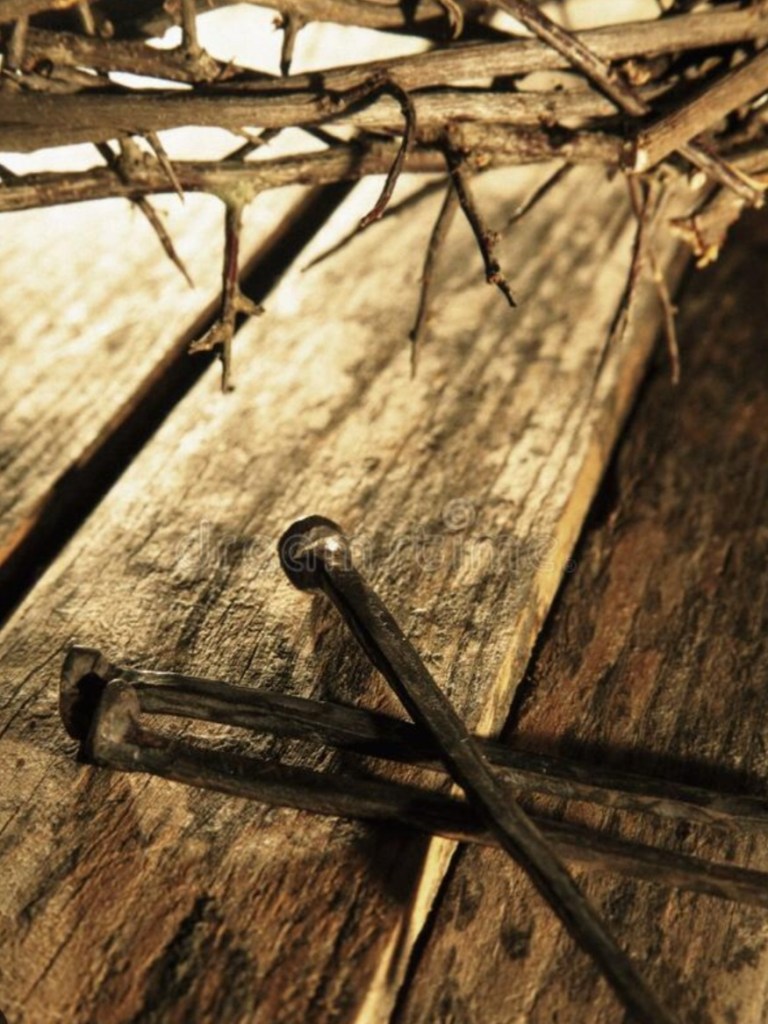
It is said that Lent is an human effort to create space for the voice of God to speak. An opportunity to make a bit more room for God in my day. In my mind. My heart. This time isn’t mandatory nor is it magic, but if it makes me think of Him, maybe even crave Him more than the thing I gave up, then why would I not. To feed myself with more of Him instead. Lent places me in solidarity with other Christ-Followers (or Stumblers, as I more often am), who corporately, between now and Easter, are perhaps a bit more intentional in our acknowledgment of our need of Him. That in this season of preparation for His torture and death, we agree with God that we are sinners in need of a Savior who exchanges His death for ours. Only in death, then, can we joyfully, gratefully receive and appreciate the new life given by His resurrection.
I know that what I feed lives and grows … What I starve withers and dies. We learn early in life not to eat anything, especially not sweets, before dinner or we would “spoil our appetite”, right? If we avoid the unnecessary thing, we preserve our appetite for the real thing, the main course. Nourishment. By now, I know from personal experience that the consumption of sweet things often ruins my appetite for the main thing. During Lent I choose to “give up” something important to me in order to “give in” or give thanks to the Lord for His ultimate sacrifice for me on the cross.
How many things in our lives have actually become, quite literally, appetite suppressants? Buy more, have more, watch more, scroll more, post more, tweet more, snap more, chat more, and the list goes on and on … suppressing any appetite for real food for my soul. Relationship. God. We all “consume” to satisfy something. But what am I really hungry for? And what am I choosing as my “comfort food”? Am I filling myself with empty things? Our Enemy tells us to “be our own god. Fill ourselves. Market ourselves. Serve ourselves. Sit on our own throne. How will this status or photo post? How many likes, follows or favorites might I get?” Maybe that will satisfy me … We were created to bear the image of our Creator, yet it is our own images and words that are projected on screen after screen, in app after app, minute after minute, hour after hour, day after day … What if we gave that up? Or at least consume far less of what fills our time, entertains our eyes, but can never fill our soul? I want to be done with ruining my appetite. Done with snacking. Empty calories, devoid of substance. I want a Lent that ruins my appetite for anything less, anything other, than God Himself.
Lent is a man-made tradition, but, at its heart, it’s not just some annual ritual; true Lent insists that we deal with our heart’s biggest spiritual issue: We are prone to wander, forget, blame, and hide. We want our own way. Control our own lives. We sin. What if LENT could become the LENS through which I more clearly see my sin, the cross and death … to see what the mercy and grace of the cross accomplishes through death – what my life in the flesh can never do. For there to be life in the Spirit, there must be death to the flesh. In our “sacrifice” we identify, in the smallest of ways, with His suffering. Sharing in His suffering and death, prepares us for the joy of the resurrection.
What if the things I give up, die to, aren’t physical like food? What if I give up gossip? Complaint? Jealousy, comparison, or envy? What if I listen more and talk less? What if, instead of giving up chocolate or coffee, I give up negativity or insensitivity or self-gratification? Maybe that’s really the point: to give up what I am dependent on to recognize what I actually need most. That whatever suppresses my appetite deadens me to the hunger pains that remind me to increase my appetite for God. And, maybe my pain, my hunger, is ironically, satisfied with a different hunger: a hunger for God. The only hunger that satisfies all other hunger. If our love for lesser things fills up our need for greater things we will never be truly satisfied. God’s grace and mercy are infinitely greater than any sin we may unearth in our heart during the season of Lent. God desires to shape us into His love-full, joy-full, thank-full people who will fill up, feed, a dark, aching, unsatisfied, and hungry world with more of Himself; the Bread of Life. May Lent simply be an opportunity to increase our appetites for righteousness, suppress our appetites for the lesser things, and, ultimately, crowd out our “self“ and make more room for Christ.
I recognize with every passing year, mistake, or missed opportunity that I have regrets … Yeah, that I worked too much or that we didn’t go camping often enough or eat dinners at the table more regularly, but really it is worse than that. I regret that I couldn’t offer you a world where you played outside with your friends from the time school got out til dark because there was nothing better to do and nothing you would rather do … a world where terror, fear, sadness, depravity, violence and hatred didn’t pour into the palms of your hands, filling your minds with much the same … a world where there was humility enough and empathy enough to step lovingly and respectfully into other peoples’ stories and courage enough and gratitude enough to step into your own … a world less interested in the promotion of a product on the outside rather than cultivation of character on the inside.
I wish I could have given you a world that understood that endless connection is not the same as intimacy, in fact it obliterates it – a world where we are more connected to the ones in front of us, closest to us, of greatest worth to us, instead of a world of millions of faceless voices full of sound bites of knowledge and opinion but often devoid of truth.
A world where the “ism’s” that always separate were replaced by bridges that unite; bridges that invite us to something on the other side of where we stand that is worth seeing; something beautiful we may have missed from the vantage point of only our own side. Maybe even Jesus. Bridges that can bear the weight of all our fallen humanity and connect us to one another in ways that seem unfathomable at this moment in our history. But on that other side, no matter which side you start from, on that other side you will most definitely see Jesus. “Oh, Aslan, will you tell us how to get into your country from our world?” ‘I shall be telling you all the time. But I will not tell you how long or short the way will be; only that it lies across a river. But do not fear that, for I am the great Bridge Builder.’“
He is the Builder of bridges. It is His connecting love alone that is strong enough to bear the weight of pride, shame, power, and the innumerable ways we sin against one another … and transform them into humility, worth, forgiveness, love. That justice sought for others without self-sacrifice is really just self-promotion. Love on behalf of the voiceless will quiet its own voice so that others can be heard.
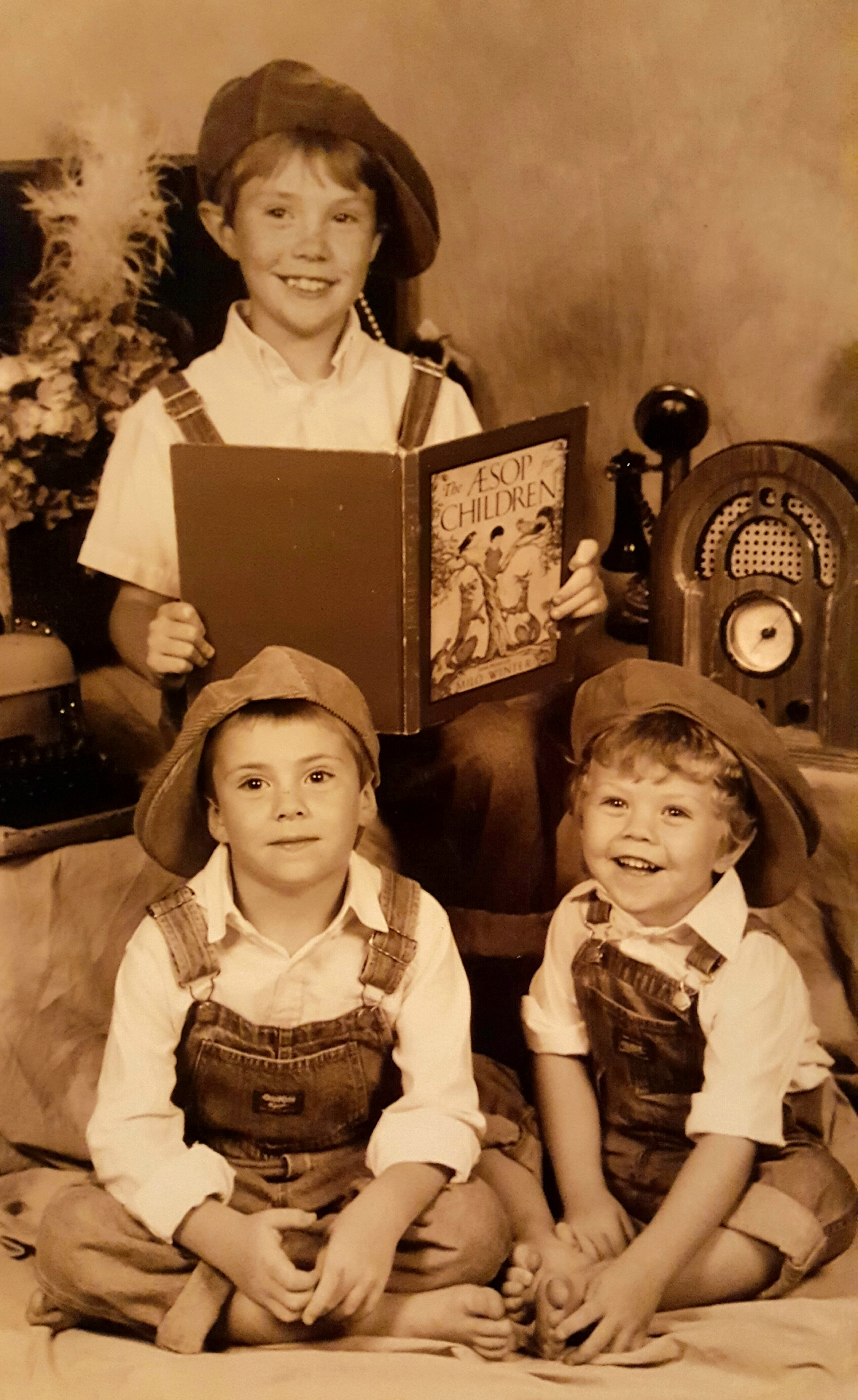
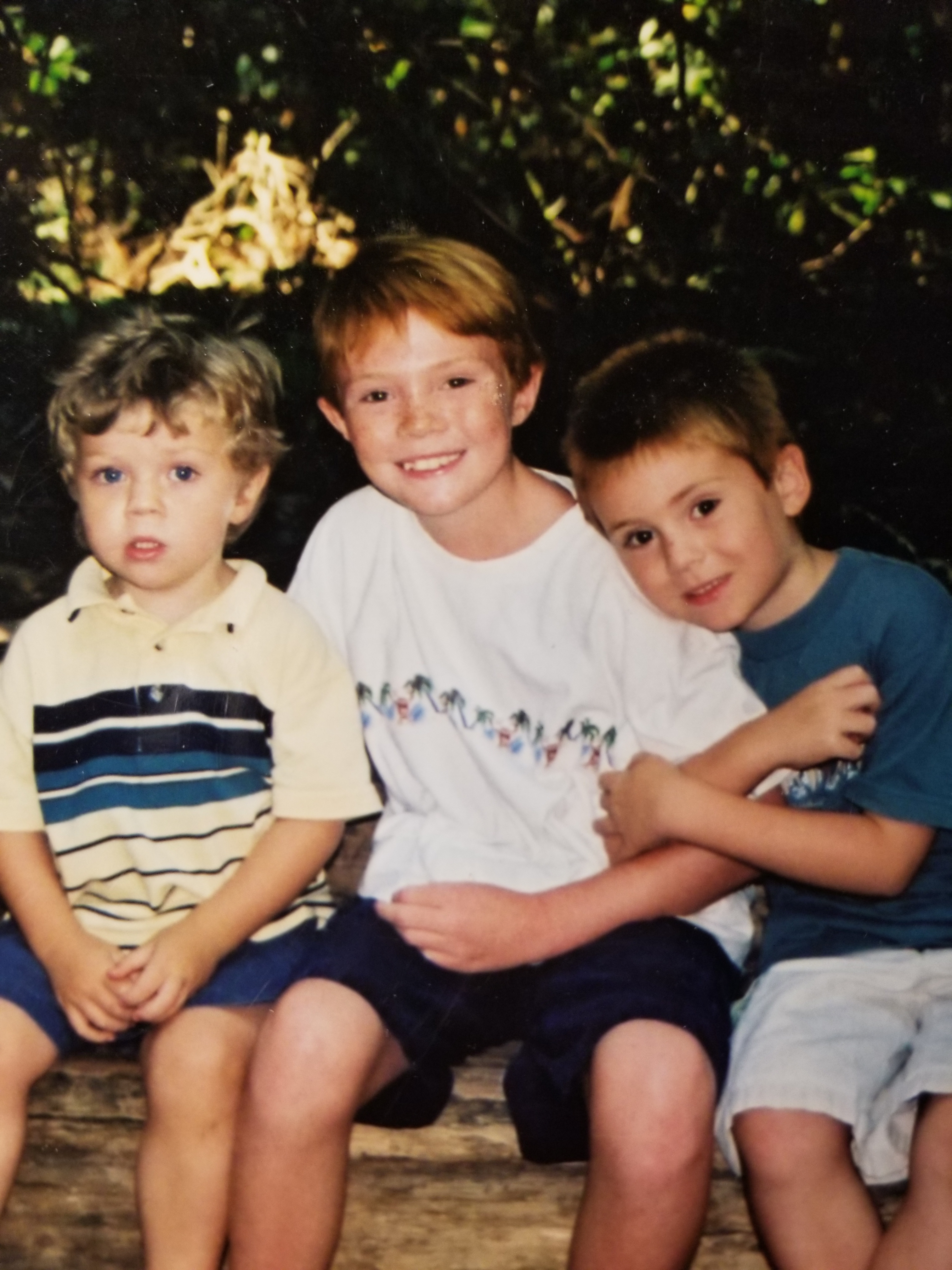
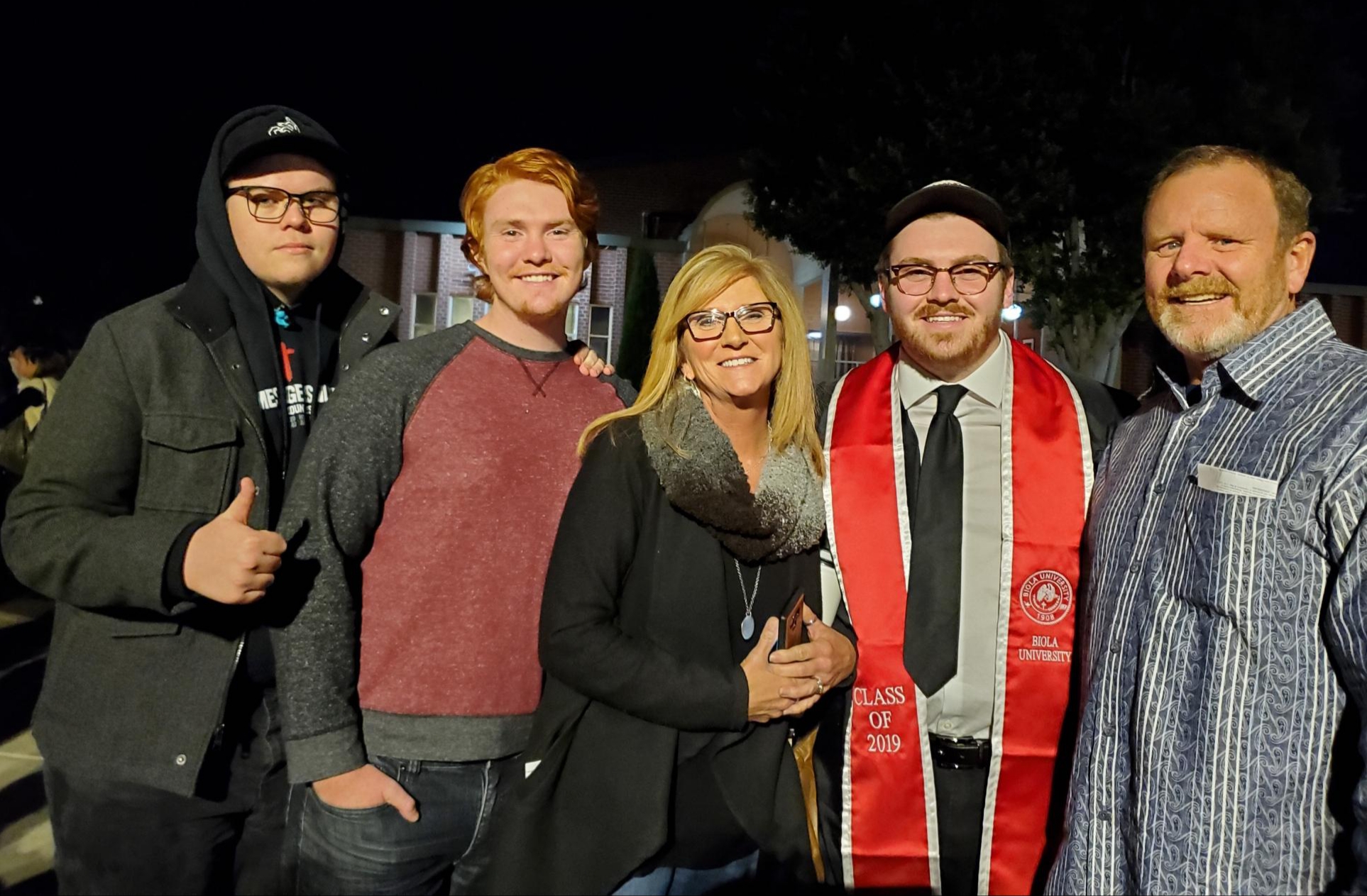
I wish I could have given you a world where we didn’t lob word grenades from our deeply dug foxholes of politics, religion and ideology, not considering the damage that we cause. That, instead, we would each take our white flag of “let’s meet in the middle, I want to hear what you have to say and I hope you will listen to me as well.” Finally, and maybe most importantly, I wish I could have given you a world that had not forgotten to Whom it owes its every breath. Every.Breath. So thankful that God made me a Mom three times over, and so grateful that He offers them far more than their Father and I ever could, both in this life and the next. Even on the worst of days when my regrets and the “I wish I could have’s” are wagging their crooked fingers and screaming in my face, those three are my Happy Mother’s Day, every day.
” … And the thirst became so bad that she almost felt she would not mind being eaten by the Lion if only she could be sure of getting a mouthful of water first.
‘If you’re thirsty, you may drink.’ … For a second she stared here and there, wondering who had spoken. Then the voice said again, ‘If you are thirsty, come and drink.’ … It was deeper, wilder, and stronger; a sort of heavy, golden voice. It did not make her any less frightened than she had been before, but it made her frightened in rather a different way. ‘Are you not thirsty?’ said the Lion. ‘I’m dying of thirst,’ said Jill. ‘Then drink,’ said the Lion. ‘May I — could I — would you mind going away while I do?’ said Jill. The Lion answered this only by a look and a very low growl. …The delicious rippling noise of the stream was driving her nearly frantic. ‘Will you promise not to – do anything to me, if I do come?’ said Jill. ‘I make no promise,’ said the Lion … ‘I daren’t come and drink,’ said Jill. ‘Then you will die of thirst,’ said the Lion. ‘Oh dear!’ said Jill, coming another step nearer. ‘I suppose I must go and look for another stream then.’ ‘There is no other stream,’ said the Lion. It never occurred to Jill to disbelieve the Lion – no one who had seen His stern face could do that – and her mind suddenly made itself up. It was the worst thing she had ever had to do, but she went forward to the stream, knelt down, and began scooping up water in her hand. It was the coldest, most refreshing water she had ever tasted. You didn’t need to drink much of it, for it quenched your thirst at once.” – C.S. Lewis, The Silver Chair
I can domesticate God, fashion him into a kitten instead of the unpredictable Lion that He is. As some smarter than me have said, I can pet him, but I might lose a hand. I can run from His roar, but what awaits me in the distance from Him may be far more dangerous. And I will likely die of thirst, if not first be torn apart by the paws of another. What if the closer I am to the roar the safer I really am?
What if only a God whose holiness both terrifies and beckons me is God enough to save me? He is more than enough to quench my profound thirst if I dare come near the stream across which he sits.
How we understand God is a matter of life and death. Psalm 139 tells us there is nothing outside of His Lordship. He is inescapable. There is no place to hide. No place that we are not seen by Him. He penetrates every aspect of our lives with His holiness. There can be no true worship, no spiritual growth, no real obedience without understanding His holiness. It defines our goal as Christians: “Be holy, for I am holy.” (1 Peter 1:16). All attributes of the Christ-follower; love, justice, wisdom, joy, compassion, creativity, mercy, righteousness, grace, peace … flow out of His holiness. The sacrificial exchange of the Cross was only necessary because His holiness required what our sin could not pay. And His great love for us required that He Himself become the way to deliver it.
God’s holiness means that He is above and beyond us, “wholly other.” So supreme, of such greatness, that He seems completely foreign to us. His holiness, at once, draws us near and frightens us away. Shatters us and pieces us back together. God is seemingly contradictory in that He is transcendent, but eminent … out there, yet with us … Creator of the universe who walks in the Garden He created … powerful, but personal … Ancient of Days who became a newborn … Alpha and Omega … first and last … beginning and end … He is at both ends and everything in between. The metaphors for God reveal His “both-ness”: Servant and King … Father and Son … Creator and Infant … Throne and Cross … Lion and Lamb. The God who robbed the very grave He dug for Himself.
To know Him, we need to know Him in His bigness and His smallness. His infinite bigness is revealed in the highest mountains and deepest canyons, yet in the smallest details of His creation. Think of the complexities of even the tiniest insect or a snowflake. Or that while I sit here writing this, and you reading this, all the cells of our bodies are doing exactly what God designed them to do. We owe Him thanks for, literally, each and every breath.
Holiness is not just another aspect of His character but is synonymous with His deity. He is love because He is holy. He exacts justice because He is holy. He imparts wisdom because He is holy. And on it goes with each magnificent aspect of His character because His nature is holy. The “fruit of His Spirit” (Galatians 5:22) offered to each Believer grows and ripens on branches strengthened and supported by the deep roots and immovable trunk of His holiness. Nothing grows apart from Him, and we are sustained only as we remain, abide, in Him (John 15).
Can the God who might rip my arm off if I try to pet Him be trusted? Psalms says that “those who know your Name will trust in you.” Is the character of God such that we can place all our weight, the fullness of who we are, what we dream, the things we cherish – even our traumas and tragedies – into the fullness of who He is? If I truly desire to find God everywhere that He can be found, I need to know who this God is. Like Mr. Beaver in the Lion, Witch and the Wardrobe explained, “Oh, no, He’s not safe, but He is good.” I need to know this God more deeply, more clearly, more intimately, by who He says that He is. Like King David, to know Him in our “guts and our bones.” To have the counsel of the Lord driven so deep in our souls that nothing can drive it out. Like Job, can we say, “Though He slay me, yet will I trust in Him” (Job 13:15).
How is this for intimacy and freedom: “To know God so thoroughly that we rest in Him totally and, therefore, are willing to risk for Him completely” – Mark Buchanan, The Holy Wild. Unless we trust in His character and seek to know Him as He is, and are honest with ourselves about who we are, we will never be intimate with Him. And never be free to be who we were made to be.
With my eyes, it is useless to look for God in any place or person that does not revere His name. I need His eyes to see the image of Himself in the faces of those who hate Him. Who blame Him. Who oppose Him. “Holy is His name” is the bedrock of our understanding of God: Creation, Fall, Law, Cross, Church, Eternity. His holiness is woven throughout His story from beginning to end and every chapter in between. The first priority of the Lord’s prayer is “Hallowed be thy name” (Matthew 6:9) – God must be regarded and holy. “I am the LORD who makes you holy” (Leviticus 20). By His Spirit, He has given us everything we need to be holy. God alone made the way for us to live with Him forever in heaven. God alone walked between the halves of the bloody carcass to make His covenant with Abraham (Gen. 15). God alone became the bloody carcass, hanging on a cross, to make His covenant with us. None of it depends on us. It all depends on the God who promises to be faithful. He must be true to Himself for He is holy. And because He is love, His love for us desires union with us.
The repetition of “holy, holy, holy” in both Isaiah and Revelation makes this of the utmost importance. There is no other aspect of God in scripture that is elevated to importance by repeating it three times. He is not, “love, love, love”, or “grace, grace, grace”, but “holy, holy, holy.” Even the heavenly beings that speak it in Isaiah’s vision have to cover themselves in the presence of the holiness of God: each has six wings – two to fly with, two to cover their eyes, and two to cover their feet (a symbol of earthliness or creatureliness). Isaiah comes “undone”, “ruined” in the presence of God’s holiness. The temple quakes and fills with smoke. “Woe to me!” cried Isaiah – “I am ruined. For I am a man of unclean lips and I live among a people of unclean lips, and my eyes have seen the King, the Lord Almighty” (Isaiah 6:5). Doomed and undone in the presence of His holiness, but God is faithful not to leave him there. He immediately sends an angel to “burn” him clean, thereby restoring him. “Your guilt is taken away and your sin atoned for” (Isaiah 6:7). The holiness of God is a fire that either cleanses us or destroys us. Another one of God’s seeming contradictions- that we are redeemed from fire BY fire.
In Isaiah’s vision, the angels could not even look upon God … In John’s vision in the book of Revelation, the creatures were “covered with eyes front and back . Each had six wings and were covered with eyes all around” (Revelation 4:8). They are now all eyes looking full upon the Lord high and lifted up. The difference between Isaiah’s vision and John’s? “Then I saw the Lamb looking as if it had been slain, standing in the center of the throne” (Rev. 5:6). Eyes uncovered, I can now see Him in His holiness. Because of Jesus, what was formerly forbidden is now revealed for all eyes to see.
Our response to God’s presence, initially, must be “woe to me.” When we see Him for who He is, we see ourselves for who we are. His glory reveals our ruin, His light exposes our darkness, His purity, our dirtiness. So, before joy in His presence comes sorrow over sin. Before cleanness, comes shame. Before we can ever rest, trust, in the holiness of God, we must first be undone by it.
In the presence of God nothing else matters. “Woe to me for I am ruined”, cried Isaiah, but there was no better place, no safer place, to be than right there, undone in the presence of the Lord. Unraveled but now ready to be refashioned in His likeness and for His plan and purposes.
This is the pattern repeated over and over in scripture: God appears in unspeakable glory; man quakes in reverent terror; God forgives and heals; God sends. From brokenness to mission is the plan for His people – R.C. Sproul
If only we could lift our eyes from ourselves to Him. Teach us, Lord, to fear you (Proverbs 31:30). Help us to find our identity not by fear of man but in fear of You. The solution to the fear of man is not in repeated assurances that we are loved and accepted by God. It is fear of God.
“He delights in those who fear him.” (Psalm 147:11)
“His friendship is for those who fear him.” (Psalm 25:14)
“His goodness is stored up for those who fear him.” (Psalm 31:19)
“Wisdom begins with the fear of the Lord.” (Psalm 111:10)
“The eye of the Lord is on those who fear him.” (Psalm 33:18)
“His steadfast love is for those who fear him.” (Psalm 103:11, 17)
The fear of the Lord is contentment (Proverbs 15:16 and 19:23); is confidence (Proverbs 14:26); is blessing (Proverbs 28:14); is spiritual safety (Proverbs 29:25); and praise and adoration (Psalm 22:23).
We must fight fear with fear: fear of man with fear of God. Only when we “worship the Lord in the splendor of holiness” (Psalm 96:9) do we discover the splendor of our humanness – that we are sinners redeemed by grace, saved by faith, reconciled to God through the cross of Jesus Christ alone (Ephesians 2:16).
May we come face to face with the God of the universe to whom the rocks cry out and all of heaven declares the glory of … to more than dip our hand in the water and be satisfied with a mere sip, but to plunge headlong into the river across which the Lion of Judah sits. The Lion whom has “swallowed up girls and boys, women and men, kings and emperors, cities and realms”, yet who bids us to come and drink and not waste another precious moment seeking another stream from which to drink … ‘for there is no other stream.’







 Even the Wind and Waves